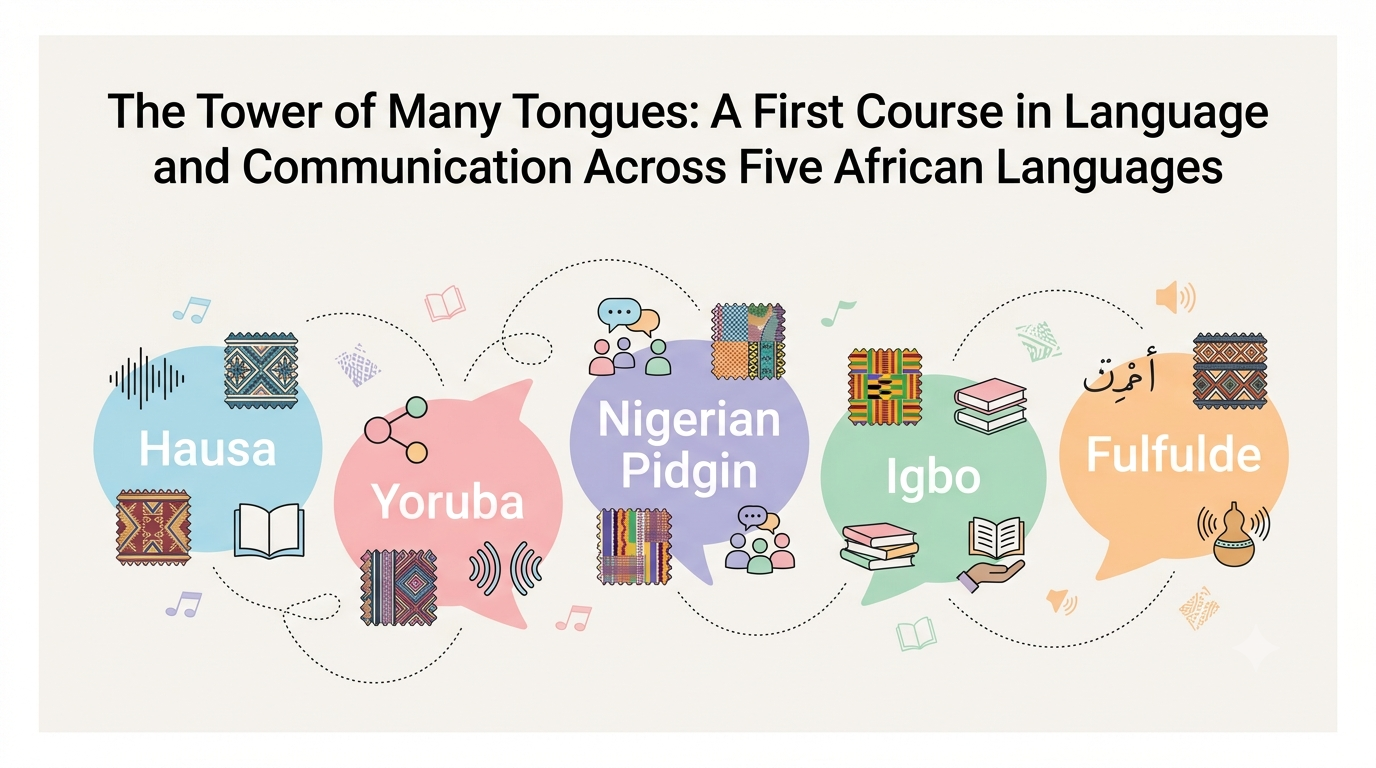
There is a question that every language learner eventually asks: why are there so many languages? Why did humanity scatter its words across the earth like seeds in the wind? The answer is both simple and profound. Language is not just a tool for communication. It is a fingerprint. It is the story of where a people have been, who they have met, what they have survived.
In Africa, this story is written more densely than anywhere else on earth. The continent is home to over two thousand languages, a quarter of all the languages spoken in the world. Among them are the five we are studying here: Swahili, Oromo, Amharic, Fulani, and Lingala. Each one is a universe. Each one carries the memory of centuries.
This course is about that memory. We are going to explore fifty questions and answers about languages and communication across these five tongues. These are the phrases you use when you talk about talking. They are the meta-conversations, the questions you ask when you want to understand how someone speaks, what they speak, and why it matters.
Let us begin with a truth that every polyglot knows: the person who speaks three languages is worth three people. In Africa, this is not a metaphor. It is a daily reality. A trader in Kinshasa might speak Lingala at the market, French at the office, and Swahili with his grandmother. A farmer in Oromia might speak Oromo at home and Amharic at the government office. Language is not a luxury. It is a survival skill. It is the ability to move between worlds.
So as we go through these fifty questions, think of them as keys. Each one opens a door into the way people think about language itself.
---
The Fifty Questions and Answers
Below are fifty questions and answers about languages and communication, organized by topic. Not every language has a direct translation for every phrase, but these are the ones that travel best. Learn them in the language you are studying, or learn a few in each. The goal is not perfection. The goal is understanding.
Talking About Language
# English Swahili Oromo Amharic Fulani Lingala
1 Do you speak English? Unazungumza Kingereza? Afaan Ingiliizi beekta? English tenagereh? A don wolwa Anglais? Olobaka Lingelésa?
2 Do you speak Swahili? Unazungumza Kiswahili? Afaan Swaahilii beekta? Swahili tenagereh? A don wolwa Swahili? Olobaka Swahili?
3 I speak a little Nazungumza kidogo Xiqqoo nan dubbadha T'ik'it'enagerehu Mi wolwa seeɗa Nalobaka moke
4 I am learning Ninajifunza Barachaa jira Iyetenarku new Mi ekkita Nazali koyekola
5 I want to learn your language Nataka kujifunza lugha yako Afaan kee barachuu barbaada Qwanqwahesh itenagnalehu Mi yiɗi ekkita ɗemngal ma Nalingi koyekola monoko na yo
6 How do you say this in Swahili? Unasemaje hii kwa Kiswahili? Kana afaan Swaahiliin akkam jette? Yih Swahili endet tiyal? Ndee ɗum e Swahili? Olobaka yango na Swahili ndenge nini?
7 What does this mean? Hii inamaanisha nini? Kun maal jechuudha? Yih min malet? Ndee ɗum firti? Yango elimboli nini?
8 I do not understand Sielewi Hin hubadhu Algebagnem Mi famali Nazali kososola te
9 Please speak slowly Tafadhali sema polepole Maaloo suuta dubbadhu Be'istu yemilwetu Achu haké hal cess Loba malembe
10 Please repeat Tafadhali rudia Maaloo irra deebi'i Be'istu dimegemi Achu hakkilo wata Loba lisusu
Language and Identity
# English Swahili Oromo Amharic Fulani Lingala
11 What is your mother tongue? Lugha yako ya mama ni nini? Afaan haadha kee maali? Yemama qwanqwa min new? Ndee ɗemngal daada ma? Monoko ya mama na yo nani?
12 My mother tongue is... Lugha yangu ya mama ni... Afaan haadha koo... Yemama qwanqwa... Ɗemngal daada am... Monoko ya mama na ngai…
13 I am bilingual Ninazungumza lugha mbili Afaan lama nan dubbadha Hulet qwanqwa enagerehu Mi wolwa ɗemɗe ɗiɗi Nalobaka monoko mibale
14 Language is culture Lugha ni utamaduni Afaan aadaa ti Qwanqwa bahil new Ɗemngal aada Monoko ezali bonkoko
15 Our language is our treasure Lugha yetu ni hazina yetu Afaan keenya qabeenya keenya Qwanqwachin mesmerachin new Ɗemngal amen ngalu amen Monoko na biso ezali bomengo na biso
16 I am proud of my language Najivunia lugha yangu Afaan kootti nan boona Qwanqwahe enewedalehu Mi seyɓi ɗemngal am Nazali na loko mpo na monoko na ngai
17 Do you speak your language at home? Unazungumza lugha yako nyumbani? Mana afaan kee dubbatta? Bet qwanqwahin tinageral? A wolwa ɗemngal ma e galle? Olobaka monoko na yo na ndako?
18 I speak it with my family Nazungumza na familia yangu Maatii koo waliin nan dubbadha Be betesebeh enagerehu Mi wolwa ɗum e ɓesngu am Nalobaka yango na libota na ngai
19 Language connects us Lugha inatuunganisha Afaan nu walitti fidha Qwanqwa inabesral Ɗemngal no seɗɗinta Monoko esangisaka biso
20 I love hearing your language Napenda kusikia lugha yako Afaan kee dhaggeeffachuu nan jaaladha Qwanqwahin mastemal ewedalehu Mi yidi nande ɗemngal ma Nalingi koyoka monoko na yo
Communication and Understanding
# English Swahili Oromo Amharic Fulani Lingala
21 Can you understand me? Unanielewa? Na hubatta? Libagnaleh? A fami lam? Oyokaka ngai?
22 I understand you Nakuelewa Si hubadhe Egebagnalehu Mi fami ma Nayoki yo
23 What did you say? Ulisema nini? Maal jette? Min aleh? Ko wi'iɗaa? Olobaki nini?
24 I did not hear you Sikusikia Si dhaggeeffadhu Alsemahu Mi nanaani ma Nayokaki yo te
25 Speak louder, please Tafadhali sema kwa sauti Maaloo sagalee ol kaasi Be'istu degga ahun Achu haala sawtu Loba makasi
26 Is that clear? Ni wazi? Ifa? Gilits' new? Laaɓi? Ezali polele?
27 Let me explain Niache nieleze Akkan ibsu Indibegn Mi faccina Bika nayebisa
28 What do you mean? Unamaanisha nini? Maal jechuu qabda? Min malet? Ko firti? Olingi koloba nini?
29 We speak different languages Tunazungumza lugha tofauti Afaan adda addaa dubbanna Yeteleyayew qwanqwa enageral Min wolwa ɗemɗe ceertuɗe Tolobaka monoko ya kokesena
30 But we can still communicate Lakini tunaweza kuwasiliana Garuu wal barsiisuu dandeenya Gin yit'inibebral Kono min mbaawi jokkondirde Kasi tokoki kosolola
Learning and Teaching
# English Swahili Oromo Amharic Fulani Lingala
31 Can you teach me? Unaweza kunifundisha? Na barsiisuu dandeessa? Atemarignaleh? A mbaawi jannginde lam? Okoki koyekolisa ngai?
32 I want to learn Nataka kujifunza Barachuu barbaada Itenagnalehu Mi yiɗi ekkita Nalingi koyekola
33 How do you say...? Unasemaje...? ...akkam jette? ...endet tiyal? Ndee...? Olobaka...ndenge nini?
34 What is this called? Hii inaitwaje? Kun maal jedhama? Yih min yibalal? Ndee ɗum noddete? Yango ebengami nini?
35 Repeat after me Rudia baada yangu Ana duuba naaf deebi'i Kateh dimegemi Wata lam Loba sima na ngai
36 You are a good teacher Wewe ni mwalimu mzuri Barsiisaa gaarii dha T'iru astemari neh A jannginoowo moƴƴo Ozali molakisi malamu
37 I am learning fast Ninajifunza haraka Saffisaan barachaa jira T'olo itenagnalehu Mi ekkita law Nazali koyekola noki
38 I am learning slowly Ninajifunza polepole Suuta barachaa jira Be'istu itenagnalehu Mi ekkita seeɗa seeɗa Nazali koyekola malembe
39 Practice makes perfect Mazoezi hufanya ukamilifu Shaakalaan gaarii ta'a Mistirat yifets'al Ekkita e ɓeydanta Kobongisa ezali kosala
40 Do not be afraid to make mistakes Usiogope kukosea Dogoggoruu hin sodaatin Sihitet atifir Taa hulu waɗde goopi Kobanga te kosala mabe
Language and the World
# English Swahili Oromo Amharic Fulani Lingala
41 How many languages do you speak? Unazungumza lugha ngapi? Afaan meeqa dubbatta? Sint qwanqwa tinageral? Ɗemɗe nocciti a wolwa? Olobaka monoko boni?
42 I speak three languages Ninazungumza lugha tatu Afaan sadi nan dubbadha Sost qwanqwa enagerehu Mi wolwa ɗemɗe tati Nalobaka monoko misato
43 Swahili is spoken in many countries Kiswahili kinazungumzwa katika nchi nyingi Swaahiliin biyyoota hedduutti dubbatama Swahili beqwarqwar hagerat yinageral Swahili e leyɗeele keewɗe Swahili elobami na mboka mingi
44 Amharic is the language of Ethiopia Kiamhari ni lugha ya Ethiopia Amaaraa afaan Itoophiyaa ti Amarigna yeEthiopia qwanqwa new Amharic ko ɗemngal Etiyopi Amharic ezali monoko ya Ethiopia
45 Lingala is spoken along the Congo River Lingala inazungumzwa kando ya Mto Kongo Lingaalaa madda Kongoo biratti dubbatama Lingala beKongo wenz kinageral Lingala e maayo Kongo Lingala elobami na ebale Congo
46 Language opens doors Lugha hufungua milango Afaan balbala bana Qwanqwa derewo yikifet'al Ɗemngal uddita dammugal Monoko ezali kofungola ba porte
47 Learning a language is a journey Kujifunza lugha ni safari Afaan barachuu imala ti Qwanqwa memar guzo new Ekkita ɗemngal ko jahaale Koyekola monoko ezali mobembo
48 Every language is beautiful Kila lugha ni nzuri Afaan hundi bareedaa dha Hulumm qwanqwa t'iru new Kala ɗemngal ko belɗum Monoko nyonso ezali kitoko
49 Never stop learning Usikate tamaa kujifunza Barachuu hin dhiisin Itenagmishin atik'ertim Taa accu ekkita Kosilisa koyekola te
50 Language is the bridge between us Lugha ni daraja kati yetu Afaan gidduu keenya riqicha ti Qwanqwa bemekakeya zegeb new Ɗemngal ko pont hakkunde amen Monoko ezali gbagba kati na biso
---
The Grammar of Talking About Language
When you talk about language in these five tongues, you notice something interesting. The words for "language" and "tongue" are often the same. In Swahili, lugha means language, but ulimi means tongue. In Oromo, afaan means both mouth and language. In Amharic, qwanqwa means language, and mila means tongue. In Fulani, ɗemngal means both tongue and language. In Lingala, monoko means mouth and language.
This is not a coincidence. It is a philosophy. Language is not something abstract. It is physical. It lives in the mouth. It is tasted. It is felt. To speak a language is to use your body. To learn a language is to train your tongue to move in new ways.
The grammar of these languages also reflects this physicality. Swahili verbs carry the subject inside them. Ninajifunza means "I am learning." The ni- is "I." The -na- is the present tense. The -jifunza is "learn." The verb is the sentence. You do not need a separate pronoun. The language is efficient.
Oromo uses suffixes to show who is speaking. Barachaa jira means "I am learning." The -aa shows the continuous tense. The jira is the auxiliary verb. Again, the language is compact.
Amharic places the verb at the end. Iyetenarku new means "I am learning." The iyetenarku is the verb. The new is the auxiliary. The sentence is built like a house, with the foundation at the end.
Fulani uses suffixes and prefixes to show tense and person. Mi ekkita means "I am learning." The mi is "I." The ekkita is "learn." The grammar is in the endings.
Lingala is more flexible. Nazali koyekola means "I am learning." The nazali is "I am." The koyekola is "to learn." The word order is similar to English, which makes it easier for beginners.
---
How to Practice Talking About Language
You cannot learn a language without talking about language. It is a recursive process. You learn words to talk about words.
Ask questions constantly. When you hear a new word, ask what it means. Ask how to say it in another language. Ask why it is said that way. Curiosity is the engine of learning.
Listen to how people talk about their own language. Ask a Swahili speaker what they love about Kiswahili. Ask an Oromo speaker what makes Afaan Oromoo special. The answers will teach you more than any textbook.
Learn the meta-vocabulary. Words like "language," "word," "sentence," "meaning," "translate," "understand." These are the tools you need to talk about talking.
Be patient with yourself. Talking about language is abstract. It takes time. But every question you ask is a step forward.
---
The Fifty-First Question
There is one question that is not on the list. It is the question you ask yourself when you have learned all fifty phrases: Why does this matter?
Language is not just a tool for communication. It is a way of seeing the world. Every language has words that do not exist in other languages. Every language has ways of expressing things that cannot be translated. When you learn another language, you do not just learn new words. You learn a new way of being human.
In Swahili, there is a word kujivunia. It means to be proud of oneself. In Oromo, there is wal barsiisuu. It means to teach each other. In Amharic, there is yit'inibebral. It means we can understand each other. In Fulani, there is jokkondirde. It means to connect. In Lingala, there is kosangisa. It means to bring together.
These words are not just vocabulary. They are invitations. They are saying, “Come, learn our language. Come, see the world as we see it. Come, be our friend.”
So learn these phrases. Use them. But remember that the most important thing you can do with language is not to speak it perfectly. It is to use it to build a bridge. And that bridge needs no translation.
It is called understanding.

Leave a comment
Your email address will not be published. Required fields are marked *