There is a word in Swahili that captures something essential: jamaa. It means family, but it means more than that. It means relatives, community, the people you belong to. In many African cultures, the individual is not the basic unit of society. The family is. You are not just you. You are your father's child, your mother's pride, your grandmother's memory, your ancestors' continuation.
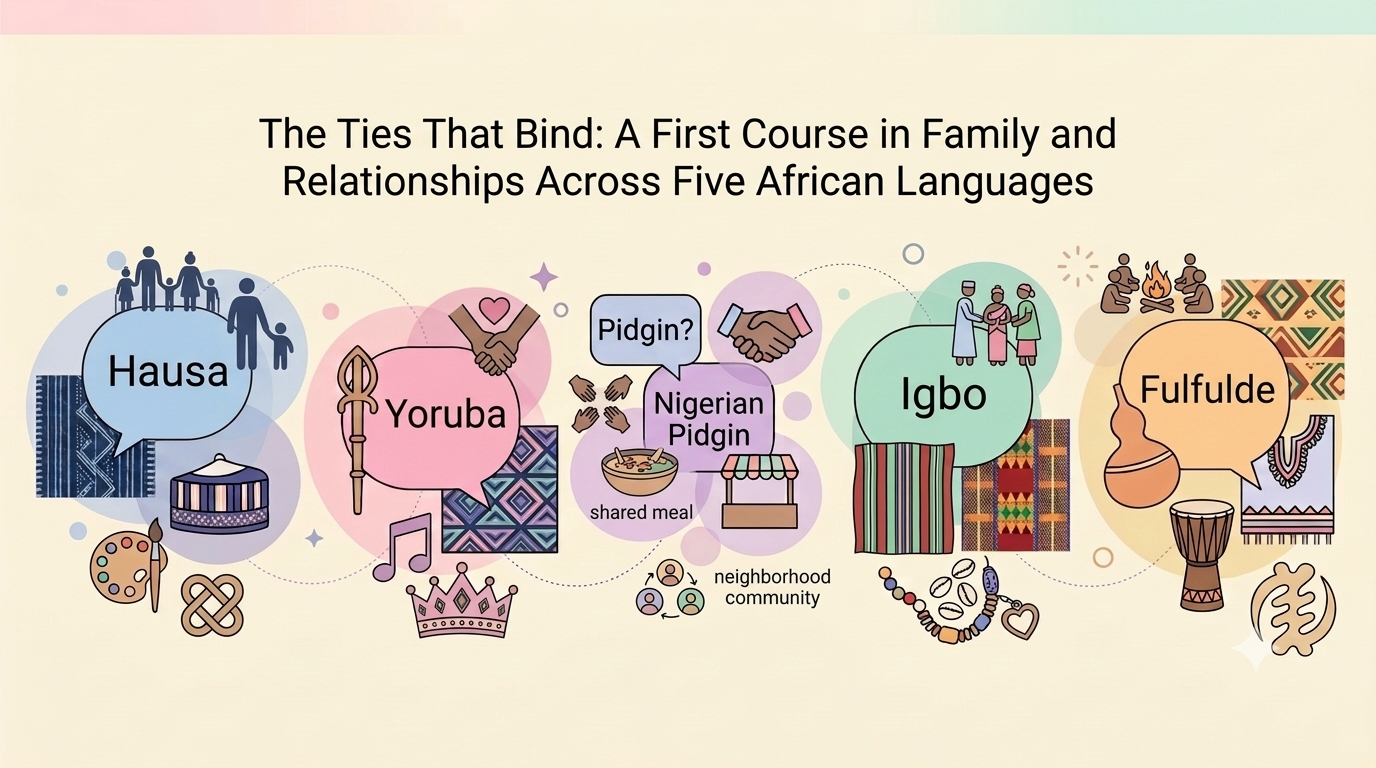
This course is about that reality. We are going to explore fifty questions and answers about family and relationships across five languages: Swahili, Oromo, Amharic, Fulani, and Lingala. These are the phrases you use when you talk about the people who made you, the people you live with, and the people you love.
Let us begin with a truth: in these cultures, family is not a topic of conversation. It is the context of conversation. When you meet someone, one of the first questions you ask is about their family. Not because you are nosy, but because you want to know who they are. You want to know where they come from. You want to know the web of relationships that holds them.
In Fulani culture, a person without family is like a tree without roots. In Oromo tradition, the maatii—the family—is the foundation of nagaa, peace. In Amharic, the beteseb is the source of identity. In Lingala, libota is everything. And in Swahili, familia is not just a word. It is a way of life.
So as we go through these fifty questions, think of them as introductions. Each one is a way of saying, “Tell me who you are. Tell me where you belong.”
---
The Fifty Questions and Answers
Below are fifty questions and answers about family and relationships, organized by topic. Not every language has a direct translation for every phrase, but these are the ones that travel best. Learn them in the language you are studying, or learn a few in each. The goal is not perfection. The goal is connection.
Immediate Family
# English Swahili Oromo Amharic Fulani Lingala
1 Do you have a family? Una familia? Maatii qabdaa? Beteseb aleh? Aɗa ɓesngu? Ozali na libota?
2 I have a large family Nina familia kubwa Maatii guddaa qaba Betam beteseb alehu Mi naɓa ɓesngu mawɗo Nazali na libota monene
3 I have a small family Nina familia ndogo Maatii xiqqaa qaba T'inish beteseb alehu Mi naɓa ɓesngu pamɗum Nazali na libota moke
4 This is my father Huyu ni baba yangu Abbaa koo kun Yih abate new Ndu baaba am Oyo ezali tata na ngai
5 This is my mother Huyu ni mama yangu Haadha koo kun Yih emaye new Ndu daada am Oyo ezali mama na ngai
6 I have two brothers Nina ndugu wawili wa kiume Obboleeyyaa lama qaba Hulet wenmed alehu Mi naɓa miñiɓɓe ɗiɗo Nazali na bandeko mibali mibale
7 I have one sister Nina dada mmoja Obboleettii tokko qaba And ehete alehu Mi naɓa debbo gooto Nazali na ndeko mwasi moko
8 I am the eldest Mimi ni mkubwa Ani hangafa Ene be'alawi negn Mi ko mawɗo Nazali motomboli
9 I am the youngest Mimi ni mdogo Ani quxusaa Ene yet'inish negn Mi ko pamɗum Nazali ya nsuka
10 My parents live in... Wazazi wangu wanaishi... Warri koo...jiraatu Wetatochche...yinoralu Jibnaaɓe am... Baboti na ngai bafandaka…
Extended Family and Relatives
# English Swahili Oromo Amharic Fulani Lingala
11 Do you have grandparents? Una babu na bibi? Akaakayyuu fi akkoo qabdaa? Ateketo aleh? Aɗa maama e baaba? Ozali na nkoko?
12 My grandmother is alive Bibi yangu yuko hai Akkoon koo lubbuun jirti Enate enatalech Maama am no wuuri Nkoko na ngai azali na bomoyi
13 My grandfather passed away Babu yangu amefariki Akaakayyuun koo du'e Abate atewere Baaba am maayi Nkoko na ngai akufaki
14 I have many cousins Nina binamu wengi Ilma-abbootii hedduu qaba Beqwarqwar yewendim alehu Mi naɓa ɓiɓɓe-ɓesngu Nazali na bandeko mingi
15 My uncle lives abroad Mjomba wangu anaishi nje ya nchi Eessuma koo biyya ala jiraata Amayeh bewar yinoral Kawu am woni leyɗe goɗɗe Malome na ngai afandaka na mboka mosusu
16 My aunt is a teacher Shangazi yangu ni mwalimu Eessumaa koo barsiisaa dha Akiste astemari nech Goggo am jannginoowo Noko na ngai azali molakisi
17 Family is everything Familia ni kila kitu Maatiin waan hunda ti Beteseb hulum new Ɓesngu ko kala Libota ezali nyonso
18 We help each other Tunasaidiana Wal gargaaruu Yitegagzal Min ndemmina Tokosalisi biso moko
19 We are close Tu karibu Wal dhiyoo Yit'ebik'al Min ɓadiiɗo Tokomi pene
20 Family comes first Familia ni ya kwanza Maatiin dursa Beteseb beqidem new Ɓesngu ko adi Libota ezali liboso
Marriage and Partnerships
# English Swahili Oromo Amharic Fulani Lingala
21 Are you married? Umeoa? Heerumtee? Agebteh? Aɗa resa? Osali libala?
22 I am married Nimeoa Heerumeera Agebtegn Mi resii Nasali libala
23 I am not married Sijaolewa Hin heerumne Alagebem Mi resaali Nasali libala te
24 I am engaged Nimechumbiwa Kaadhimameera Tet'azebiku Mi faɗɗi Nasali na ndanga
25 Do you have a boyfriend? Una mpenzi? Jaalallee qabdaa? Wondim aleh? Aɗa giɗo? Ozali na moninga ya mobali?
26 Do you have a girlfriend? Una mpenzi? Jaalallee qabdaa? Wondim aleh? Aɗa giɗo? Ozali na moninga ya mwasi?
27 When is the wedding? Harusi ni lini? Cidhaan yoom? K'irsinet meche new? Ndee dewgal? Libala ekosala ngonga nini?
28 I love my wife Nampenda mke wangu Haadha manaa koo nan jaaladha Mistoche ewedalehu Mi yidi debbo am Nalingi mwasi na ngai
29 I love my husband Nampenda mume wangu Abbaa manaa koo nan jaaladha Baloche ewedalehu Mi yidi gorko am Nalingi mobali na ngai
30 We are happy together Tuna furaha pamoja Waliin gammachuu qabna Ande t'irign Min weltaare bee Tozali esengo elongo
Children and Parenting
# English Swahili Oromo Amharic Fulani Lingala
31 Do you have children? Una watoto? Ijoollee qabdaa? Lijoch aleh? Aɗa ɓiɓɓe? Ozali na bana?
32 I have two children Nina watoto wawili Ijoollee lama qaba Hulet lijoch alehu Mi naɓa ɓiɓɓe ɗiɗo Nazali na bana mibale
33 My son is... Mwanangu wa kiume ni... Ilma koo... Lije...new Ɓiɗɗo am gorko... Mwana na ngai ya mobali…
34 My daughter is... Mwanangu wa kike ni... Intala koo... Lije...new Ɓiɗɗo am debbo... Mwana na ngai ya mwasi…
35 How old is your child? Mtoto wako ana miaka mingapi? Daayni ke meeqa? Lijih amet shint hono? Duuɓi ɓiɗɗo ma? Mwana na yo azali na mbula boni?
36 Children are a blessing Watoto ni baraka Ijoolleen eebba Lijoch barkat new Ɓiɓɓe ko barke Bana ezali mapamboli
37 I love my children Nawapenda watoto wangu Ijoollee koo nan jaaladha Lijoche ewedalehu Mi yidi ɓiɓɓe am Nalingi bana na ngai
38 Raising children is hard work Kulea watoto ni kazi ngumu Ijoollee guddisuun hojii ulfaataa Lijoch manebret yesera new Ndema ɓiɓɓe ko golle saɗtuɗe Kobokisa bana ezali mosala makasi
39 Discipline with love Nidhamu kwa upendo Jaalalaan adabuu Beferiha t'ik'ik' Ñeeñe e yiɗde Kobongisa na bolingo
40 My parents taught me well Wazazi wangu walinifundisha vizuri Warri koo gaarii na barsiisan Wetatochche t'iru astemarun Jibnaaɓe am janngini lam Baboti na ngai balakisaki ngai malamu
Love and Relationships
# English Swahili Oromo Amharic Fulani Lingala
41 I love you Ninakupenda Sin jaaladha Ewdeshalew Mi yidi ma Nalingi yo
42 I miss you Ninakukumbuka Si yaada Enatalehu Mi jaŋgi ma Nazali na yo na makanisi
43 You are beautiful Wewe ni mzuri Ati bareedduu T'iru neh A belɗum Ozali kitoko
44 You are handsome Wewe ni mzuri Ati bareedaa T'iru neh A belɗum Ozali kitoko
45 You have a good heart Una moyo mzuri Onnee gaarii qabda T'iru libb aleh Aɗa ɓernde moƴƴere Ozali na motema malamu
46 I trust you Ninakuamini Si amanadha Litamagnalehu Mi hoolaade ma Natyi yo
47 I am here for you Niko hapa kwa ajili yako Siif jira Kegna alehu Mi woni ɗoo sabu ma Nazali awa mpo na yo
48 We will face it together Tutakabiliana pamoja Waliin haa lollannu Ande inigegn Min ndaaronndoo bee Tokosilisa elongo
49 My love for you is strong Upendo wangu kwako ni mkubwa Jaalalli koo siif cima Fik'irih bezu new Yiɗde am e ma ko tiiɗnde Bolingo na ngai mpo na yo ezali makasi
50 You are my family now Wewe ni familia yangu sasa Amma maatii koo dha Ahun betesebeh neh Jooni a woni ɓesngu am Sikoyo ozali libota na ngai
---
The Grammar of Belonging
The grammar of family in these languages reveals something profound. In Swahili, the word for brother is ndugu, but it is also used for cousins, and sometimes for close friends. The line between family and community is thin. In Oromo, the word maatii covers the nuclear family, but fira covers the extended kin. The language distinguishes between those you live with and those you belong to.
In Amharic, family terms are specific. Abat is father. Enat is mother. Wendim is brother. Ehet is sister. But there are also words for paternal uncle (amaye) and maternal uncle (agiste), because in Amharic culture, the mother's brother has a special role. The language carries the structure of the society.
In Fulani, the word ɓesngu means family, but it also means household. The Fulani are traditionally pastoralists, and the household is the unit that moves together. The language reflects this. Family is not just blood. It is the people who travel with you.
In Lingala, libota means family. But the word ndeko means sibling, and it is used broadly. In Kinshasa, your ndeko might be your actual brother or your best friend. The language is generous with its kinship terms. It invites people in.
---
How to Practice Family Language
You cannot learn family language from a book. You learn it by being part of a family.
Ask about people's families. When you meet someone, ask about their parents, their siblings, their children. Show genuine interest. Listen to the stories.
Learn the terms for your own family. How do you say "my mother" in Swahili? How do you say "my son" in Oromo? Practice these phrases until they feel natural.
Share your own family. Language is a two-way street. Tell people about your family. Show them photos. Invite them into your world.
Respect the boundaries. In some cultures, asking about marriage or children is normal. In others, it is intrusive. Learn the norms. Be sensitive.
---
The Fifty-First Question
There is one question that is not on the list. It is the question you ask yourself when you have learned all fifty phrases: What does family mean to me?
Family is not just biology. It is not just the people who share your blood. It is the people who share your life. It is the ones who show up when you are sick, who celebrate when you succeed, who hold you when you fall.
In Swahili, there is a proverb: Damu ni nzito kuliko maji. Blood is thicker than water. But in many African cultures, the proverb is incomplete. Yes, blood is thick. But so is love. So is loyalty. So is the choice to belong.
So learn these phrases. Use them. But remember that the most important thing you can say to your family is not a phrase at all. It is your presence. It is your willingness to be there.
And that presence needs no translation.

Leave a comment
Your email address will not be published. Required fields are marked *