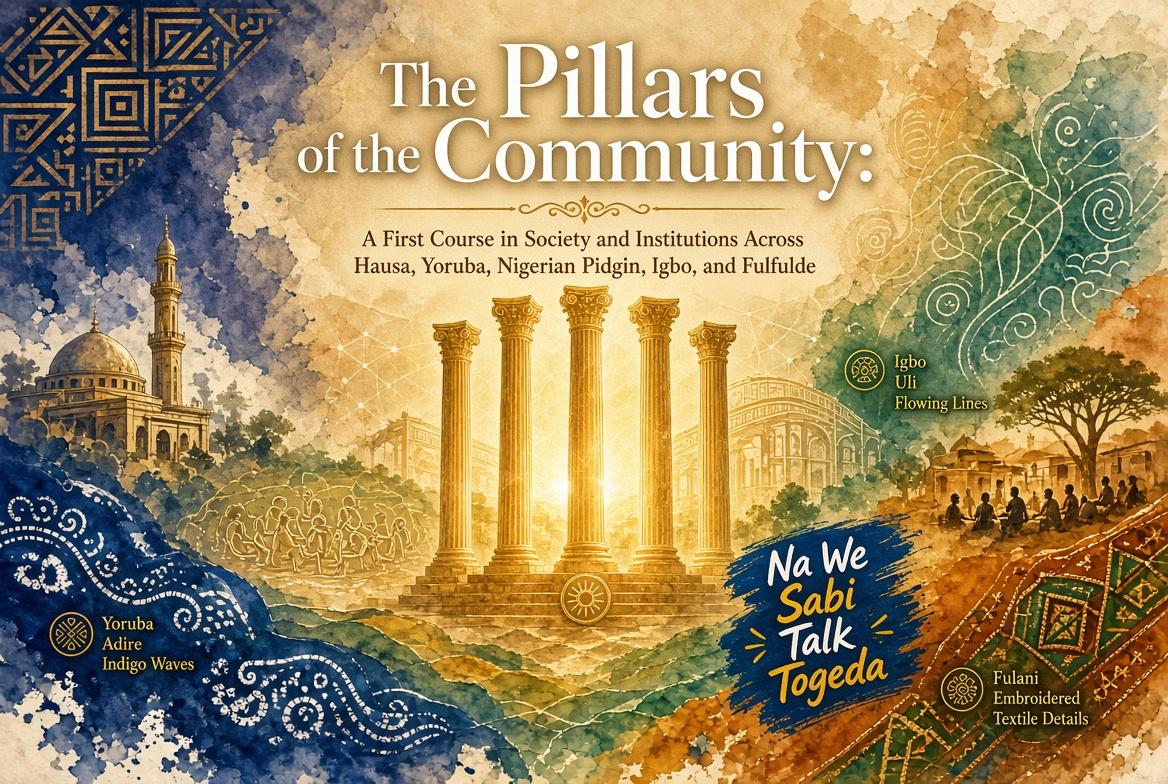
Every society is built on structures. Some are visible: the court house, the police station, the school, the hospital, the mosque, the church. Others are invisible: the unwritten rules of respect, the obligations of kinship, the quiet authority of elders. In Nigeria, both kinds of structures exist side by side, and the language you use to talk about them reveals how you see your place in the world.
This course is about those structures. We are going to explore fifty questions and answers about society and institutions across five languages: Hausa, Yoruba, Nigerian Pidgin, Igbo, and Fulfulde. These are the phrases you use when you talk about government, about law, about education, about religion, about community, and about the way people organize themselves.
Let us begin with a truth: in Nigeria, the institution is not an abstraction. It is a person. The government is not a building in Abuja. It is the local government chairman who grew up on your street. The law is not a document. It is the policeman at the checkpoint who knows your father. The school is not a system. It is the teacher who stayed late to help you pass your exams.
This is why language matters. When you speak about institutions in these five languages, you are not just naming things. You are describing relationships. You are saying, “This is how we live together. This is how we govern ourselves. This is how we take care of each other.”
So as we go through these fifty questions, think of them as a map. Each one helps you understand the invisible architecture of Nigerian life.
---
Government and Leadership
The government is present in every Nigerian life. It is the road that is not repaired. It is the tax that is collected. It is the school that is underfunded. It is also the promise of something better. These phrases help you talk about it.
English Hausa Yoruba Pidgin Igbo Fulfulde
Who is the president? Wanene shugaban ƙasa? Ta ni ni Ààrẹ? Who be president? Onye bụ onye isi ala? Onon woni hooreejo leydi?
Who is the governor? Wanene gwamna? Ta ni ni Gómìnà? Who be governor? Onye bụ gọvanọ? Onon woni gomnati?
Who is the local government chairman? Wanene shugaban ƙaramar hukuma? Ta ni ni Olórí ìjọba ìbílẹ̀? Who be local government chairman? Onye bụ onye isi ọchịchị ime obodo? Onon woni hooreejo laamu nokku?
The government is not doing enough Gwamnati ba ta yin isasshen aiki ba Ìjọba kò ṣe é tó Government no dey do enough Gọọmentị anaghị eme nke ọma Laamu waɗaani no haani
We need good leadership Muna buƙatar shugabanci nagari A nílò ìdarí tó dára We need good leader Anyị chọrọ ezigbo ndu Min nani jaagorgal moƴƴal
The election is coming Zaɓe na zuwa Ìdìbò ń bọ̀ Election dey come Ntuli aka na-abịa Cuɓal no aroore
I will vote Zan yi zaɓe Mo máa dìbò I go vote M ga-eme ntuli aka Mi woototo
The government has failed us Gwamnati ta gaza mu Ìjọba ti kùnà wá Government don fail us Gọọmentị dara ada anyị Laamu fewti min
We want change Muna son sauyi A fẹ́ ìyípadà We want change Anyị chọrọ mgbanwe Min nani waylugol
The leader is listening Shugaba na saurara Olórí ń gbọ́ Leader dey hear Onye ndu na-ege ntị Hooreejo no nana
---
Law and Order
The law is a daily reality in Nigeria. It is the traffic warden. It is the court case. It is the police checkpoint. It is also the source of fear and the source of hope. These phrases help you talk about it.
English Hausa Yoruba Pidgin Igbo Fulfulde
Where is the police station? Ina ofishin 'yan sanda? Níbo ni ọ́fíìsì ọlọ́pàá wà? Where police station dey? Ebee ka ụlọ ọrụ ndị uwe ojii dị? Toy poste polis woni?
I want to report a crime Ina so in kai ƙara Mo fẹ́ gbé ẹ̀sùn I want report crime Achọrọ m ikpesa akụkọ Mi yiɗi habde goopi
The law is the law Doka doka ce Òfin ni òfin Law na law Iwu bụ iwu Sarɗi ko sarɗi
We must obey the law Dole mu bi doka A gbọ́dọ̀ tẹ̀lé òfin We must obey law Anyị ga-erube isi n'iwu Min segi haɗde e sarɗi
The judge is fair Alkali adali ne Adájọ́ dára Judge fair Onye ikpe ziri ezi Ñaawoowo moƴƴo
He is in prison Yana gidan yari Ó wà ní ọgbà ẹ̀wọ̀n He dey prison Ọ nọ n'ụlọ mkpọrọ O woni e kasoo
I have a lawyer Ina da lauya Mo ní agbẹjọ́rò I get lawyer Enwere m ọkàiwu Mi naɓa awokaa
The case is in court Shari'ar tana kotu Ẹjọ́ náà wà ní kọ́ọ̀tù Case dey court Ikpe ahụ nọ n'ụlọ ikpe Kiita no e ñaawirde
Justice must prevail Adalci dole ya yi nasara Ìdájọ́ gbọ́dọ̀ ṣẹ́gun Justice must win Ikpe ziri ezi ga-emeri Ñaawoore foolata
We are waiting for the verdict Muna jiran hukunci A ń dúró fún ìdájọ́ We dey wait for verdict Anyị na-eche mkpebi Min eegii ñaawoore
---
Education and Schools
Education is one of the most valued institutions in Nigeria. Parents sacrifice everything to send their children to school. Teachers are respected. Degrees are celebrated. These phrases help you talk about learning.
English Hausa Yoruba Pidgin Igbo Fulfulde
Where is the school? Ina makaranta? Níbo ni ilé-ìwé wà? Where school dey? Ebee ka ụlọ akwụkwọ dị? Toy duɗal woni?
I am a student Ni ɗalibi ne Akẹ́kọ̀ọ́ ni mí I be student Abụ m nwa akwụkwọ Mi ko janngoowo
I am a teacher Ni malami ne Olùkọ́ ni mí I be teacher Abụ m onye nkuzi Mi ko jannginoowo
Education is important Ilimi yana da muhimmanci Ẹ̀kọ́ ṣe pàtàkì Education important Agụmakwụkwọ dị mkpa Jannde ko tiiɗnde
I want to go to university Ina so in je jami'a Mo fẹ́ lọ sí yunifásítì I want go university Achọrọ m ịga mahadum Mi yiɗi yahde jaaɓi-haaɗtirde
The school fees are high Kuɗin makaranta ya yi tsada Owó ilé-ìwé ga School fees high Ụgwọ ụlọ akwụkwọ dị elu Njoɓdi duɗal toowndi
I passed my exams Na ci jarrabawa Mo já fá ìdánwò I pass my exam Agafere m ule Mi fooli jarribooji
I failed my exams Na faɗi jarrabawa Mo kùnà ìdánwò I fail my exam Adara m ule Mi fewti jarribooji
Knowledge is power Ilimi iko ne Ìmọ̀ ni agbára Knowledge na power Ihe ọmụma bụ ike Anndal ko doole
We must support our schools Dole mu tallafa wa makarantunmu A gbọ́dọ̀ ṣèrànwọ́ fún àwọn ilé-ìwé wa We must support our school Anyị ga-akwado ụlọ akwụkwọ anyị Min segi wallitde duɗe amen
---
Religion and Faith
Religion is woven into the fabric of Nigerian life. It is the call to prayer at dawn. It is the church choir on Sunday. It is the traditional shrine in the village. It is the moral compass that guides millions. These phrases help you talk about it.
English Hausa Yoruba Pidgin Igbo Fulfulde
Where is the mosque? Ina masallaci? Níbo ni mọ́ṣáláṣí wà? Where mosque dey? Ebee ka ụlọ alakụba dị? Toy juulirde woni?
Where is the church? Ina coci? Níbo ni ṣọ́ọ̀ṣì wà? Where church dey? Ebee ka ụka dị? Toy ekklisaa woni?
I am a Muslim Ni musulmi ne Mùsùlùmí ni mí I be Muslim Abụ m onye Alakụba Mi ko juulɗo
I am a Christian Ni Kirista ne Kìrìsítẹ́nì ni mí I be Christian Abụ m onye Kraịst Mi ko kereceejo
I believe in God Na yi imani da Allah Mo gbàgbọ́ nínú Ọlọ́run I believe in God Ekwere m na Chineke Mi ngoongɗini Alla
Prayer is important Addu'a tana da muhimmanci Àdúrà ṣe pàtàkì Prayer important Ekpere dị mkpa Do'a ko tiiɗnde
We pray together Muna yin addu'a tare A ń gbàdúrà papọ̀ We dey pray together Anyị na-ekpe ekpere ọnụ Min no juuldee e wondude
God is good Allah nagari ne Ọlọ́run dára God good Chineke dị mma Alla moƴƴo
Faith gives us strength Imani yana ba mu ƙarfi Ìgbàgbọ́ ń fún wá ní agbára Faith dey give us power Okwukwe na-enye anyị ike Gomɗam no hokkata min doole
We respect all religions Muna girmama duk addinai A ń bọ̀wọ̀ fún gbogbo ẹ̀sìn We respect all religion Anyị na-asọpụrụ okpukpe niile Min teddinaa diine fuu
---
Community and Tradition
The community is the oldest institution. It is the elders sitting under the tree. It is the women's meeting. It is the age-grade association. It is the traditional ruler on his throne. These phrases help you talk about it.
English Hausa Yoruba Pidgin Igbo Fulfulde
Who is the traditional ruler? Wanene sarki? Ta ni ni Ọba? Who be traditional ruler? Onye bụ Eze? Onon woni laamiiɗo?
The elders are wise Dattawa suna da hikima Àwọn àgbàlagbà gbọ́n Elders wise Ndị okenye maara ihe Mawɓe naɓa hakkille
We respect our traditions Muna girmama al'adunmu A ń bọ̀wọ̀ fún àṣà wa We respect our tradition Anyị na-asọpụrụ omenala anyị Min teddinaa aada amen
The community comes first Al'umma ce ta farko Àwùjọ ni àkọ́kọ́ Community come first Obodo bụ nke mbụ Rennda ko adi
We help each other Muna taimakon juna A ń ràn ara wa lọ́wọ́ We dey help each other Anyị na-enyere ibe anyị aka Min ndemmina
The meeting is tomorrow Taro gobe ne Ìpàdé náà ni lọ́la Meeting na tomorrow Nzukọ ahụ bụ echi Birewe ko jaŋngo
Everyone must attend Kowa dole ya halarta Gbogbo ènìyàn gbọ́dọ̀ wá Everybody must come Onye ọ bụla ga-abịa Kala neɗɗo segi warde
We are one people Mu mutane ɗaya ne Àwa ènìyàn kan ni We be one people Anyị bụ otu ndị Min ko yimɓe gootum
Our culture is our identity Al'adunmu shine asalinmu Àṣà wa ni ìdánimọ̀ wa Our culture na our identity Omenala anyị bụ njirimara anyị Aada amen ko anndal amen
We must protect our heritage Dole mu kare gadonmu A gbọ́dọ̀ dáàbò bo ogún wa We must protect our heritage Anyị ga-echekwa ihe nketa anyị Min segi reende ndonu amen
---
The Grammar of Society
The grammar of society is the grammar of belonging. It is about how we place ourselves in relation to others.
In Hausa, the word al'umma means community. It comes from Arabic, but it has been fully absorbed into Hausa. It carries the weight of the umma, the global community of believers, but it also means the local community, the people you live with.
In Yoruba, the word àwùjọ means society or community. It is related to àjọ, which means a gathering or an association. The Yoruba have a long tradition of voluntary associations—age grades, hometown unions, professional groups. The language reflects this.
In Nigerian Pidgin, the word community is used directly, but it is often replaced by we or our people. Pidgin is a language of inclusion. It says, “We are in this together.”
In Igbo, the word obodo means community or town. It is a central concept in Igbo life. The Igbo say, Igwe bụ ike—the community is power. The individual finds strength in the group.
In Fulfulde, the word rennda means community or society. It is related to renndude, which means to gather or to come together. The Fulani are a pastoral people, and the community is the group that moves together, that shares the grazing lands, that protects each other.
---
How to Practice the Language of Society
You cannot learn the language of society from a book. You learn it by participating.
Attend a community meeting. In Nigeria, community meetings are held regularly. Attend one. Listen to how people speak. Learn the phrases of respect and participation.
Visit a government office. Go to a local government office. Watch how people speak to the officials. Learn the phrases of request and gratitude.
Talk to an elder. Find an elder in your community. Ask them about the traditional institutions. Listen to their stories. Learn the words they use.
Read the news. Read Nigerian newspapers in English and in local languages. Pay attention to how they talk about government, law, education, and religion.
Be respectful. In Nigeria, respect is everything. Learn how to address elders. Learn how to greet officials. Learn how to speak in public. The words matter, but so does the tone.
---
The Fifty-First Question
There is one question that is not on the list. It is the question you ask yourself when you have learned all these phrases: What is my place in society?
Society is not just a system. It is a relationship. It is the way you relate to your neighbor, to your leader, to your tradition, to your God. It is the way you carry yourself in public. It is the way you speak about others. It is the way you contribute to the common good.
In Nigeria, there is a saying: Àgbà kì í wà lọ́jà, kí orí ọmọ tuntun wọ́—an elder cannot be in the market and the head of a newborn baby will be bent. It means that as long as there are elders, there is guidance. As long as there is community, there is hope.
So learn these phrases. Use them. But remember that the most important thing you can bring to society is not your knowledge. It is your participation. It is your willingness to show up. It is your commitment to the common good.
And that commitment needs no translation.
It is called citizenship.

Leave a comment
Your email address will not be published. Required fields are marked *