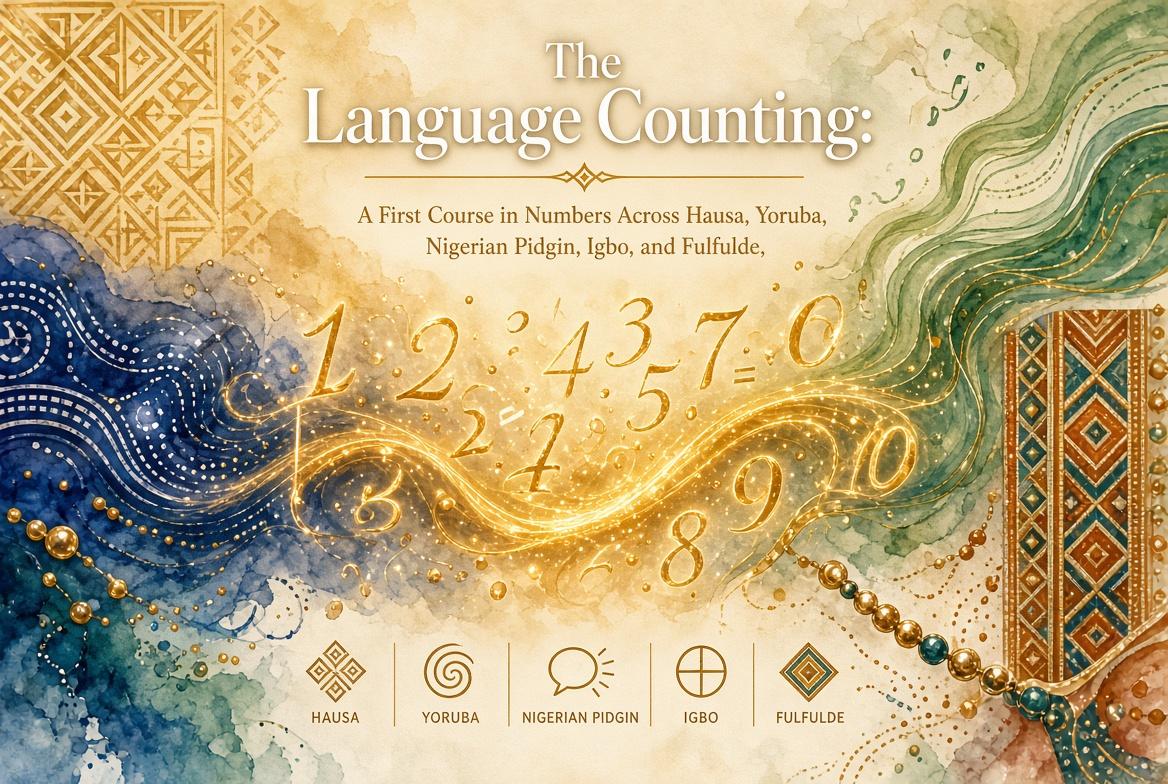
Numbers are the skeleton of daily life. They tell you how much to pay, how many people are coming, what time to arrive, how far you must travel. They are the first thing you learn in any language, and often the last thing you master. In Nigeria, numbers are not just mathematical. They are cultural. They carry the memory of trade routes, of ancient markets, of counting systems that predate the arrival of Arabic numerals and European colonizers.
This course is about those numbers. We are going to explore fifty questions and answers about numbers across five languages: Hausa, Yoruba, Nigerian Pidgin, Igbo, and Fulfulde. These are the phrases you use when you buy and sell, when you count your children, when you tell someone your age, when you negotiate a price, and when you simply want to know how many.
Let us begin with a truth: in many Nigerian languages, counting is not a neutral act. Among the Yoruba, certain numbers are sacred. Seven is significant. Sixteen is complete. Among the Igbo, the number four is tied to the four market days. Among the Hausa, the number ten is the foundation of the counting system. Among the Fulani, cattle are counted with a precision that reflects generations of pastoral life.
So as we go through these fifty questions, do not just memorize the numbers. Try to feel the rhythm. Feel the history. Feel the way a people have counted their world for centuries.
---
Basic Numbers: One to Ten
The foundation of all counting is the numbers one through ten. These are the words you will use most often. Learn them until they live in your mouth.
English Hausa Yoruba Pidgin Igbo Fulfulde
One Ɗaya Kan One Otu Go'o
Two Biyu Méjì Two Abụọ Ɗiɗi
Three Uku Mẹ́ta Three Atọ Tati
Four Huɗu Mẹ́rin Four Anọ Nayi
Five Biyar Márùn-ún Five Ise Jowi
Six Shida Mẹ́fà Six Isii Jeegom
Seven Bakwai Méje Seven Asaa Jeeɗiɗi
Eight Takwas Mẹ́jọ Eight Asatọ Jeetati
Nine Tara Mẹ́sàn-án Nine Itoolu Jeenayi
Ten Goma Mẹ́wàá Ten Iri Sappo
---
Numbers Eleven to Twenty
Once you know one to ten, the next step is eleven to twenty. In some of these languages, the numbers follow a pattern. In others, they must be memorized.
English Hausa Yoruba Pidgin Igbo Fulfulde
Eleven Goma sha ɗaya Mọ́kànlá Eleven Iri na otu Sappo e go'o
Twelve Goma sha biyu Méjìlá Twelve Iri na abụọ Sappo e ɗiɗi
Thirteen Goma sha uku Mẹ́tàlá Thirteen Iri na atọ Sappo e tati
Fourteen Goma sha huɗu Mẹ́rìnlá Fourteen Iri na anọ Sappo e nayi
Fifteen Goma sha biyar Mẹ́ẹ̀dógún Fifteen Iri na ise Sappo e jowi
Sixteen Goma sha shida Mẹ́rìndínlógún Sixteen Iri na isii Sappo e jeegom
Seventeen Goma sha bakwai Mẹ́tàdínlógún Seventeen Iri na asaa Sappo e jeeɗiɗi
Eighteen Goma sha takwas Méjìdínlógún Eighteen Iri na asatọ Sappo e jeetati
Nineteen Goma sha tara Mọ́kàndínlógún Nineteen Iri na itoolu Sappo e jeenayi
Twenty Ashirin Ogún Twenty Iri abụọ Noogas
---
Tens and Hundreds
As the numbers grow, the patterns become more complex. But with practice, they become second nature.
English Hausa Yoruba Pidgin Igbo Fulfulde
Thirty Talatin Ọgbọ̀n Thirty Iri atọ Capanɗi
Forty Arba'in Ogójì Forty Iri anọ Nappo
Fifty Hamsin Àádọ́ta Fifty Iri ise Jowi e sappo
Sixty Sittin Ọgọ́ta Sixty Iri isii Sappo e jeegom
Seventy Saba'in Àádọ́rin Seventy Iri asaa Sappo e jeeɗiɗi
Eighty Tamanin Ọgọ́rin Eighty Iri asatọ Sappo e jeetati
Ninety Tis'in Àádọ́rùn-ún Ninety Iri itoolu Sappo e jeenayi
One hundred Ɗari Ọgọ́rùn-ún Hundred Narị Teemedere
Two hundred Ɗari biyu Igba Two hundred Narị abụọ Teemedere ɗiɗi
One thousand Dubu Ẹgbẹ̀rún Thousand Puku Ujunere
---
Asking About Numbers
Now that you know the numbers themselves, you need to know how to ask about them. These phrases help you find out how many, how much, and how far.
English Hausa Yoruba Pidgin Igbo Fulfulde
How many? Nawa? Elòó? How many? Ego ole? Noye?
How much is this? Nawa ne wannan? Elòó ni èyí? How much be this? Ego ole bụ nke a? Noye ɗum?
How many people? Mutane nawa? Ènìyàn mélòó? How many people? Mmadụ ole? Yimɓe noye?
How many children? Yara nawa? Ọmọ mélòó? How many pikin? Ụmụaka ole? Sukaaɓe noye?
How old are you? Shekarunka nawa? Ọdún mélòó ni ọ́? How old you be? Afọ ole ka ị dị? Duuɓi ma noye?
How far is it? Nawa ne nisa? Báwo ni ó jìn tó? How far e be? Ebe ole dị anya? Noye nisa?
How long will it take? Zai ɗauki lokaci nawa? Yóò gba àkókò mélòó? How long e go take? Oge ole ka ọ ga-ewe? Noye waktu?
What is the price? Menene farashi? Kí ni iye owó? Wetin be price? Gịnị bụ ọnụ ahịa? Noye njoɓdi?
Give me two Ba ni biyu Fún mi ní méjì Give me two Nye m abụọ Hokku lam ɗiɗi
I want three Ina son uku Mo fẹ́ mẹ́ta I want three Achọrọ m atọ Mi yiɗi tati
---
Numbers in the Market
The market is where numbers come alive. This is where you negotiate, where you count your change, where you argue about the price of tomatoes. These phrases are the language of trade.
English Hausa Yoruba Pidgin Igbo Fulfulde
How much for this? Nawa ne wannan? Elòó ni èyí? How much for this? Ego ole maka nke a? Noye ɗum?
That is too expensive Ya yi tsada sosai Ó wọ́n jù E too expensive Ọ dị oke ọnụ Ɗum tiiɗi sanne
Reduce the price Rage farashin Dín iye owó kù Reduce the price Belata ọnụ ahịa Ustu njoɓdi
I will pay five Zan biya biyar Mo máa san márùn-ún I go pay five M ga-akwụ ise Mi yoɓata jowi
Give me change Ba ni canji Fún mi ní ẹ̀yà Give me change Nye m ego mgbanwe Hokku lam ceede
Count it again Sake kirga Kà á lẹ́ẹ̀kan sí i Count am again Gụọ ya ọzọ Limtu ɗum kadi
That is not enough Wannan bai isa ba Èyí kò tó That no enough Nke a ezughị Ɗum yonaani
Add a little more Ƙara kaɗan Fi díẹ̀ kún un Add small Tinye ntakịrị Ɓeydu seeɗa
We have agreed Mun yarda A ti gbà We don agree Anyị ekwenyela Min jaɓii
Thank you for the trade Na gode da ciniki Ẹ ṣé fún òwò Thank you for business Daalụ maka azụmahịa Jaraama njulaagu
---
Numbers in Time and Date
Numbers are essential for telling time and marking dates. These phrases help you place events in time.
English Hausa Yoruba Pidgin Igbo Fulfulde
One o'clock Ɗaya Aago kan One o'clock Elekere otu Waktu gooto
Two o'clock Biyu Aago méjì Two o'clock Elekere abụọ Waktu ɗiɗi
Three days Kwana uku Ọjọ́ mẹ́ta Three days Ụbọchị atọ Balɗe tati
One week Mako ɗaya Ọ̀sẹ̀ kan One week Otu izu Yontere gooto
Two months Wata biyu Oṣù méjì Two months Ọnwa abụọ Lewru ɗiɗi
Five years Shekaru biyar Ọdún márùn-ún Five years Afọ ise Duuɓi jowi
The first of May Daya ga Mayu Ọjọ́ kìíní oṣù May First of May Mbụ nke May Adi siilo
The year 2024 Shekara 2024 Ọdún 2024 Year 2024 Afọ 2024 Hitaande 2024
In two hours Cikin awa biyu Ní wákàtí méjì In two hours N'ime awa abụọ E nder waktu ɗiɗi
Ten minutes ago Minti goma da suka wuce Ní ìṣẹ́jú mẹ́wàá sẹ́yìn Ten minutes ago Nkeji iri gara aga Minit sappo ɓennuɗo
---
Numbers in Family and Community
Numbers help us describe our families, our communities, and our obligations. These phrases help you talk about the people in your life.
English Hausa Yoruba Pidgin Igbo Fulfulde
I have two children Ina da yara biyu Mo ní ọmọ méjì I get two pikin Enwere m ụmụ abụọ Mi naɓa sukaaɓe ɗiɗo
I have three brothers Ina da 'yan'uwa uku Mo ní ẹ̀gbọ́n mẹ́ta I get three brother Enwere m ụmụnne atọ Mi naɓa miñiɓɓe tati
There are five of us Mu biyar ne Àwa márùn-ún ni We be five Anyị bụ ise Min ko jowi
The whole family Dukan iyali Gbogbo ẹbí The whole family Ezinụlọ niile Ɓesngu fuu
Half of the people Rabin mutane Ìdajì àwọn ènìyàn Half of the people Ọkara nke ndị mmadụ Feccere yimɓe
All of them Dukansu Gbogbo wọn All of dem Ha niile Ɓe fuu
None of them Babu ɗayansu Kò sí ọ̀kankan nínú wọn None of dem Ọ dịghị onye n'ime ha Rewo e maa
A few people Mutane kaɗan Àwọn ènìyàn díẹ̀ Small people Mmadụ ole na ole Yimɓe seeɗa
Many people Mutane da yawa Ọ̀pọ̀ ènìyàn Plenty people Ọtụtụ mmadụ Yimɓe ɗuuɗɓe
Everyone Kowa Gbogbo ènìyàn Everybody Onye ọ bụla Kala neɗɗo
---
The Grammar of Numbers
Numbers in these languages are not just words. They are systems. They carry the logic of the culture that created them.
In Hausa, the numbers from eleven to nineteen are formed by saying "ten and one," "ten and two," and so on. Goma sha ɗaya literally means "ten and one." This is a transparent system. Once you know the pattern, you can count to ninety-nine.
In Yoruba, the numbers are more complex. The Yoruba use a subtractive system for some numbers. Mẹ́rìndínlógún—sixteen—literally means "four less than twenty." This is a legacy of the Yoruba base-twenty counting system. It is not difficult once you understand the logic, but it requires patience.
In Nigerian Pidgin, the numbers are borrowed directly from English. This makes them easy for English speakers. But Pidgin also has its own ways of expressing quantity. Plenty means many. Small means few. Well well means very many.
In Igbo, the numbers are relatively straightforward. Iri means ten. Iri na otu means eleven—literally "ten and one." The system is similar to Hausa. It is logical and transparent.
In Fulfulde, the numbers reflect the pastoral heritage of the Fulani. Sappo means ten. Noogas means twenty. The numbers are used to count cattle, to measure distances, to negotiate bride price. They are practical numbers, born of the open road.
---
How to Practice Numbers
You cannot learn numbers from a book. You learn them by using them.
Count everything. Count the plates on your table. Count the cars on your street. Count the steps to your door. Say the numbers out loud in the language you are studying.
Go to the market. Buy something. Negotiate the price. Count your change. Use the phrases you have learned.
Learn your family's numbers. How many siblings do you have? How old are your parents? How many cousins? Practice saying these numbers in your new language.
Practice with a friend. Ask each other questions. "How many children do you have?" "How much is this?" "How far is it?" Answer in the language.
Listen to the radio. Listen to market reports, sports scores, weather forecasts. Pay attention to the numbers.
---
The Fifty-First Question
There is one question that is not on the list. It is the question you ask yourself when you have learned all these numbers: What do numbers mean?
Numbers are not just quantities. They are memories. They are the number of years since your grandmother was born. They are the number of children in your family. They are the price of a bag of rice. They are the distance to your hometown.
In Nigeria, there is a saying: Ɗaya ba shi da ƙarfi, amma tare muna da ƙarfi—one is not strong, but together we are strong. It means that numbers matter. It means that counting matters. It means that every single person counts.
So learn these numbers. Use them. But remember that the most important thing you can do with numbers is not to count them. It is to use them to connect. It is to say, "I have two children, and I love them." It is to say, "I will pay you five naira, and I trust you." It is to say, “There are many of us, and we are one.”
And that connection needs no translation.
It is called humanity.

Leave a comment
Your email address will not be published. Required fields are marked *