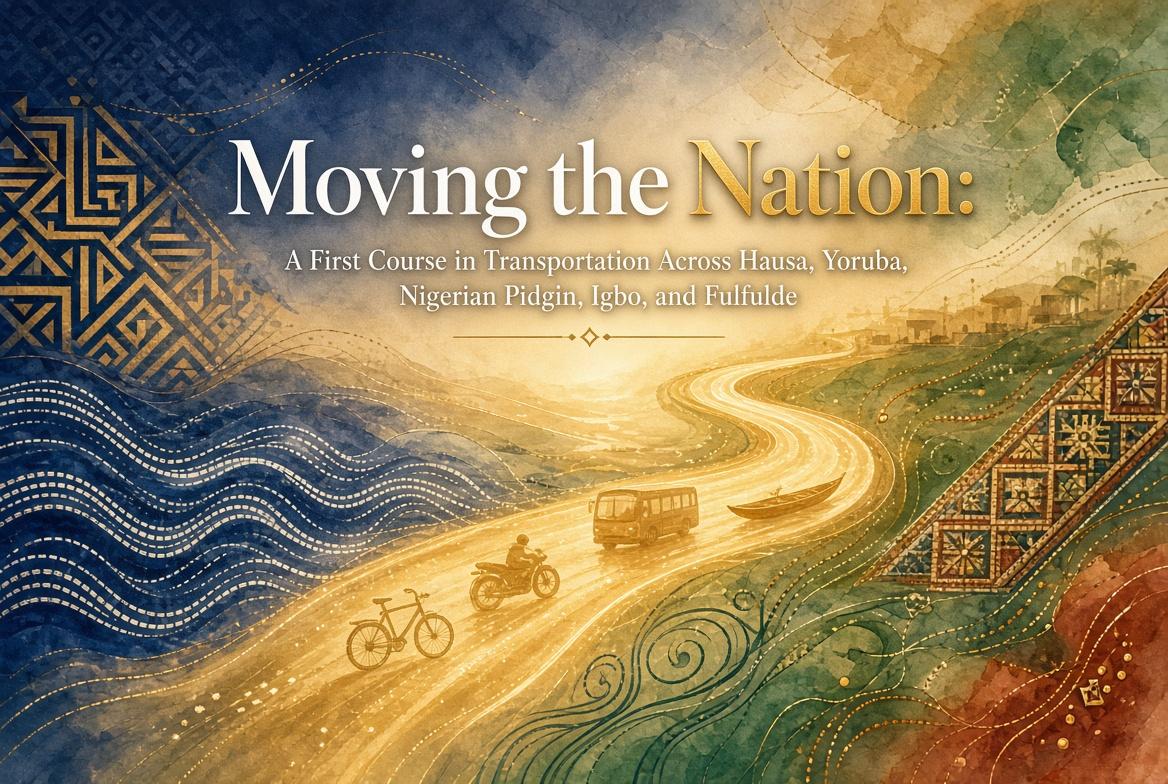
Nigeria moves. That is the first thing you notice. The buses rumbling down potholed roads. The motorcycle taxis weaving through traffic. The trains groaning along ancient tracks. The boats gliding across creeks and rivers. The airplanes lifting off from Lagos and Abuja and Port Harcourt. Nigeria is a country in motion, and the language of that motion is as rich and varied as the people who speak it.
This course is about that language. We are going to explore fifty questions and answers about transportation across five languages: Hausa, Yoruba, Nigerian Pidgin, Igbo, and Fulfulde. These are the phrases you use when you want to board a bus, hire a taxi, negotiate a fare, or simply understand how to get from one place to another.
Let us begin with a truth: in Nigeria, transportation is not just about vehicles. It is about people. It is about the driver who knows every pothole on the road. It is about the conductor who hangs out of the door shouting destinations. It is about the woman selling water and groundnuts at the motor park. It is about the mechanic who can fix anything with wire and prayer. Transportation in Nigeria is a human ecosystem, and the language reflects that.
So as we go through these fifty questions, think of them as a ticket. Each one helps you board the vehicle. Each one helps you move.
---
At the Bus Park
The bus park, or motor park, is the heart of Nigerian transportation. It is loud, chaotic, and full of life. These phrases help you navigate it.
English Hausa Yoruba Pidgin Igbo Fulfulde
Where is the bus park? Ina tashar bas? Níbo ni ibùdókọ̀ ọkọ̀ wà? Where bus park dey? Ebee ka ebe ụgbọ ala dị? Toy nokku oto woni?
I want to go to... Ina so in je... Mo fẹ́ lọ sí... I want go... Achọrọ m ịga... Mi yiɗi yahde…
Which bus goes to...? Wace bas za ta je...? Ọkọ̀ wo ni ó ń lọ sí...? Which bus dey go...? Ụgbọ ala ole na-aga...? Ndee oto yahata...?
How much is the fare? Nawa ne kudin mota? Elòó ni owó ọkọ̀? How much be transport? Ego ole bụ ụgbọ? Noye njoɓdi oto?
When does the bus leave? Yaushe bas zai tashi? Ìgbà wo ni ọkọ̀ yóò gbéra? When bus go leave? Mgbe ole ka ụgbọ ala ga-apụ? Ndee tuma oto yaltata?
Is this seat taken? An kwana wannan wurin? Ṣé ẹnìkan jókòó níbí? Somebody dey sit here? Onye nọ ebe a? Neɗɗo jooɗii ɗoo?
I want a window seat Ina son wurin taga Mo fẹ́ ibùjókòó fèrèsé I want window seat Achọrọ m oche windo Mi yiɗi jooɗorde windo
Call me when we reach Kira ni idan mun isa Pè mí nígbà tí a bá dé Call me when we reach Kpọọ m mgbe anyị rutere Noddanam tuma min yottii
I am getting off here Zan sauka nan Mo ń sọ̀ kalẹ̀ níbí I dey come down here Ana m agbada ebe a Mi jippaade ɗoo
Thank you, driver Na gode, direba Ẹ ṣé, awakọ̀ Thank you, driver Daalụ, ọkwọ ụgbọala Jaraama, doowoowo
---
Taxis and Motorcycles
Taxis and motorcycles, known as okada in Yoruba and achaba in Hausa, are the quickest way to move through Nigerian cities. These phrases help you hire them and negotiate the price.
English Hausa Yoruba Pidgin Igbo Fulfulde
Taxi! Tasi! Táksì! Taxi! Tagzi! Taksi!
Are you available? Kana da wuri? Ṣé o wà lófẹ̀? You dey free? Ị dị free? A ndimaani?
Take me to... Kai ni... Gbé mi lọ sí... Carry me go... Were m gaa... Naanu lam…
How much to...? Nawa zuwa...? Elòó lọ sí...? How much to...? Ego ole ga...? Noye haa...?
That is too much Ya yi tsada Ó wọ́n jù E too much Ọ dị oke ọnụ Ɗum tiiɗi
Reduce it Rage shi Dín in kù Reduce am Belata ya Ustu ɗum
I will pay... Zan biya... Mo máa san... I go pay... M ga-akwụ... Mi yoɓata…
Let us go Mu tafi Ẹ jẹ́ ká lọ Make we go Ka anyị gaa Ndeen yahu
Stop here Tsaya nan Dúró níbí Stop here Kwụsị ebe a Dartu ɗoo
I have arrived Na isa Mo ti dé I don reach Abịala m Mi yottii
---
On the Road
Once you are moving, you need to talk about the journey. These phrases help you describe the road, the traffic, and the experience of travel.
English Hausa Yoruba Pidgin Igbo Fulfulde
The road is bad Hanya ba ta da kyau Ọ̀nà kò dára Road bad Ụzọ adịghị mma Laawol boni
There is traffic Akwai cunkoson ababen hawa Ìdìtẹ̀ ọkọ̀ wà Traffic dey Okporo ụzọ juru Laawol heewi
We are stuck Mun makale A ti dí We don stuck Anyị akwụsịla Min daarii
The journey is long Tafiyar tana da nisa Ìrìn àjò náà jìn Journey long Njem ahụ dị anya Jahaale ndaari
Are we almost there? Mun kusa isa? A fẹ́rẹ̀ dé? We almost reach? Anyị fọrọ nke nta irute? Min ɓadii yottude?
How much longer? Nawa kuma? Elòó sí i? How much more? Ego ole ọzọ? Noye kadi?
I am tired Na gaji Ó rẹ̀ mí I don tire Ike gwụrụ m Mi ronkii
I am hungry Ina jin yunwa Ebi ń pa mí Hunger dey catch me Agụụ na-agụ m Mi wele
I need to use the toilet Ina buƙatar bayan gida Mo nílò ilé ìwẹ̀ I need toilet Achọrọ m ụlọ mposi Mi nani suudu boyi
Let us rest Mu huta Ẹ jẹ́ ká sinmi Make we rest Ka anyị zuo ike Ndeen fooɗde
---
Air and Water Travel
Nigeria is a country of rivers, creeks, and coastlines. Boats and ferries are essential. And for long distances, airplanes are the fastest option. These phrases help you navigate air and water.
English Hausa Yoruba Pidgin Igbo Fulfulde
Where is the airport? Ina filin jirgi? Níbo ni pápá ọkọ̀ òfuurufú wà? Where airport dey? Ebee ka ọdụ ụgbọ elu dị? Toy aeroport woni?
Where is the seaport? Ina tashar jirgin ruwa? Níbo ni ibùdókọ̀ ojú omi wà? Where seaport dey? Ebee ka ọdụ ụgbọ mmiri dị? Toy port woni?
I want to buy a ticket Ina so in sayi tikiti Mo fẹ́ ra tikẹ́ẹ̀tì I want buy ticket Achọrọ m ịzụta tiketi Mi yiɗi soodde tikke
One-way or return? Tafiya ɗaya ko dawowa? Ọ̀nà kan tàbí ìpadà? One way or return? Otu ụzọ ma ọ bụ nloghachi? Yahdu maa rutto?
What time is boarding? Wane lokaci ne shiga? Àkókò wo ni wíwọ̀? What time boarding? Oge ole bụ ịbanye? Ndee waktu naatugol?
Is the flight delayed? Jirgin ya jinkirta? Ṣé ọkọ̀ òfuurufú náà pẹ́? Flight don delay? Ụgbọ elu ahụ egbuola oge? Jirgi oo leelotii?
The boat is leaving Jirgin ruwa na tashi Ọkọ̀ ojú omi ń lọ Boat dey go Ụgbọ mmiri na-apụ Loote no yahde
I am seasick Ina jin jiri Ó ń ṣe mí ní ojú omi Sea dey make me sick Oké osimiri na-eme m ọrịa Mbu na nawnata lam
Life jacket Rigar ceto Aṣọ ìgbàlà Life jacket Uwe nchekwa Kolte ndimaaku
We have landed Mun sauka A ti balẹ̀ We don land Anyị adatala Min jippaama
---
Vehicle Problems and Repairs
Vehicles break down. It is a fact of life in Nigeria. These phrases help you talk about problems and find solutions.
English Hausa Yoruba Pidgin Igbo Fulfulde
The car has broken down Mota ta lalace Ọkọ̀ ti bàjẹ́ Car don spoil Ụgbọ ala mebiri Oto bonnii
The tyre is flat Taya ta fashe Táyà ti fọ́ Tyre don flat Taya gbawara Taya seekii
We need petrol Muna buƙatar man fetur A nílò epo We need petrol Anyị chọrọ mmanụ ụgbọala Min nani petirool
Where is the mechanic? Ina makanike? Níbo ni mẹ́káníkì wà? Where mechanic dey? Ebee ka mekaniki dị? Toy mekanik woni?
Can you fix it? Za ka iya gyara shi? Ṣé o lè tún un ṣe? You fit fix am? Ị nwere ike ịrụzi ya? A mbaawi moƴƴinde ɗum?
How long will it take? Zai ɗauki lokaci nawa? Yóò gba àkókò mélòó? How long e go take? Oge ole ka ọ ga-ewe? Noye waktu?
I need a tow truck Ina buƙatar motar ja Mo nílò ọkọ̀ ìfà I need tow truck Achọrọ m ụgbọ ala ndọkpụ Mi nani oto fooɗoowo
This is an emergency Wannan gaggawa ce Èyí jẹ́ pàjáwìrì This na emergency Nke a bụ ihe mberede Ɗum ko heña
Call for help Kira taimako Pe ìrànlọ́wọ́ Call for help Kpọọ enyemaka Noddanam ballal
Thank you for your help Na gode da taimakonka Ẹ ṣé fún ìrànlọ́wọ́ rẹ Thank you for your help Daalụ maka enyemaka gị Jaraama ballal ma
---
The Grammar of Motion
The grammar of transportation is the grammar of coming and going. It is about how we move through the world.
In Hausa, the verb tafi means "to travel" or "to go." Zan tafi means "I will go." The verb iso means "to arrive." Na iso means "I have arrived." The language distinguishes between the journey and the destination.
In Yoruba, the verb lọ means "to go." The verb dé means "to arrive." Mo ń lọ means "I am going." Mo ti dé means "I have arrived." The verbs are simple, but they carry the weight of movement.
In Nigerian Pidgin, the verb go is used for the future. I go reach means "I will arrive." The verb reach means "to arrive." I don reach means "I have arrived." Pidgin is a language of action. It moves fast, like the buses it describes.
In Igbo, the verb ga means "to go." The verb rute means "to arrive." Ana m aga means "I am going." Abịala m means "I have arrived." The verbs are direct and clear.
In Fulfulde, the verb yahde means "to go." The verb yottude means "to arrive." Mi yahata means "I will go." Mi yottii means "I have arrived." The language of the Fulani is the language of the road.
---
How to Practice Transportation Language
You cannot learn transportation language from a book. You learn it by moving.
Take a bus. Go to a bus park. Buy a ticket. Ask for directions. Practice the phrases. Feel the rhythm of the park.
Hire a taxi. Negotiate the fare. Give directions. Thank the driver. Use the language.
Listen to the conductors. Stand near a bus park and listen. The conductors are the poets of Nigerian transportation. They will teach you more than any textbook.
Learn the names of vehicles. Learn how to say car, bus, taxi, motorcycle, bicycle, boat, airplane, train. These are the words you will use every day.
Be patient. Transportation in Nigeria can be slow. Traffic can be terrible. Vehicles can break down. Learn to be patient. Learn to laugh. Learn to enjoy the journey.
---
The Fifty-First Question
There is one question that is not on the list. It is the question you ask yourself when you have learned all these phrases: Where am I going?
Transportation is not just about moving from one place to another. It is about the people you meet along the way. It is about the stories you hear. It is about the kindness of strangers. It is about the journey, not just the destination.
In Nigeria, there is a saying: Ìrìn àjò ló ń pèé kí ò ní jìnnà—the journey is what makes the destination sweet. It means that the road teaches you. It means that the movement matters.
So learn these phrases. Use them. But remember that the most important thing you can bring to any journey is not your ticket. It is your patience. It is your curiosity. It is your willingness to sit beside a stranger and listen to their story.
And that willingness needs no translation.
It is called humanity.

Leave a comment
Your email address will not be published. Required fields are marked *