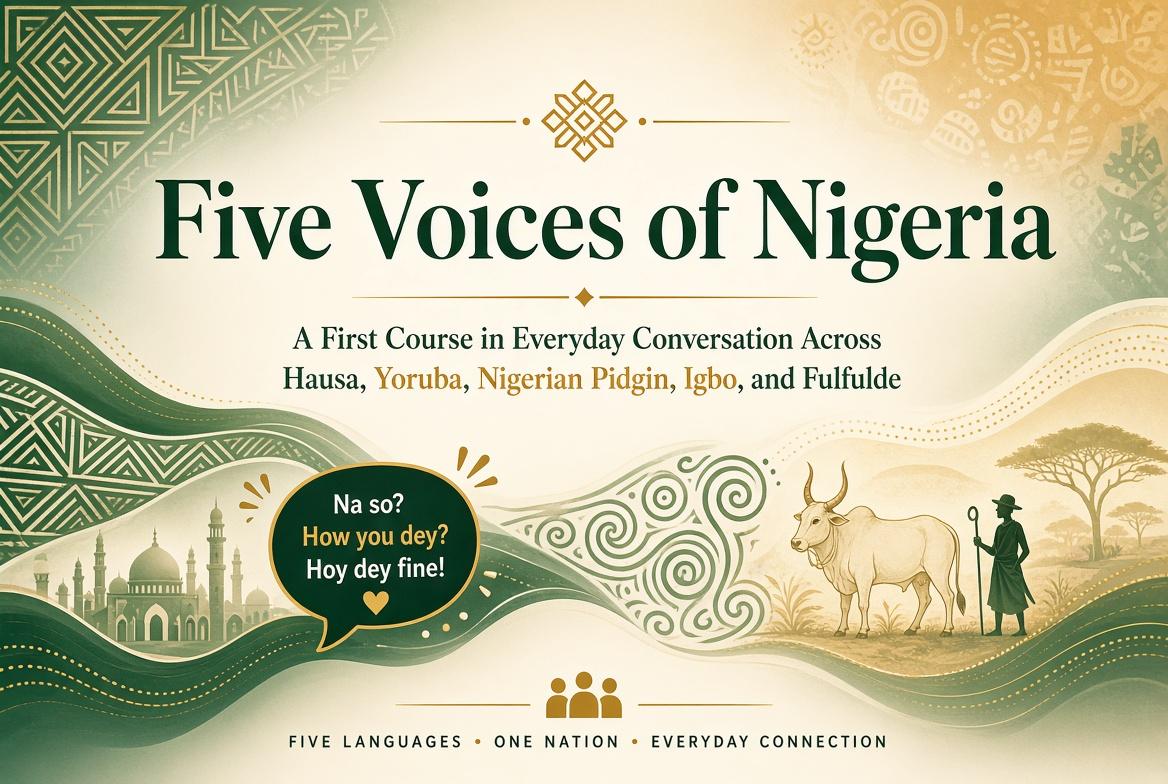
Nigeria is not one country. It is many countries wearing the same flag. Walk through the streets of Kano in the north, and you will hear Hausa flowing like a river. Cross into Yorubaland in the southwest, and the tones of Yoruba will rise and fall like music. Step into Onitsha market in the southeast, and Igbo will hit your ears with its rapid-fire rhythm. Travel through the Middle Belt, and you may hear Fulfulde spoken by herders moving their cattle. And everywhere, in every city, in every market, in every bus park, you will hear Nigerian Pidgin—the language that belongs to no one ethnic group and to everyone at once.
This course is about those five voices. We are going to explore questions and answers across six everyday situations: arranging to meet, telling time, dates, the weather, entertaining guests, travel, and making reservations. These are the phrases you need to move through daily life in one of the most vibrant, chaotic, and welcoming countries on earth.
Let us begin with a truth: in Nigeria, language is not just communication. It is identity. It is belonging. It is the sound of home. When you greet someone in their mother tongue, you are not just being polite. You are saying, “I see you. I respect you. I know where you come from.”
So let us learn. Let us learn to greet, to plan, to travel, and to welcome. Let us learn the words that make Nigeria move.
---
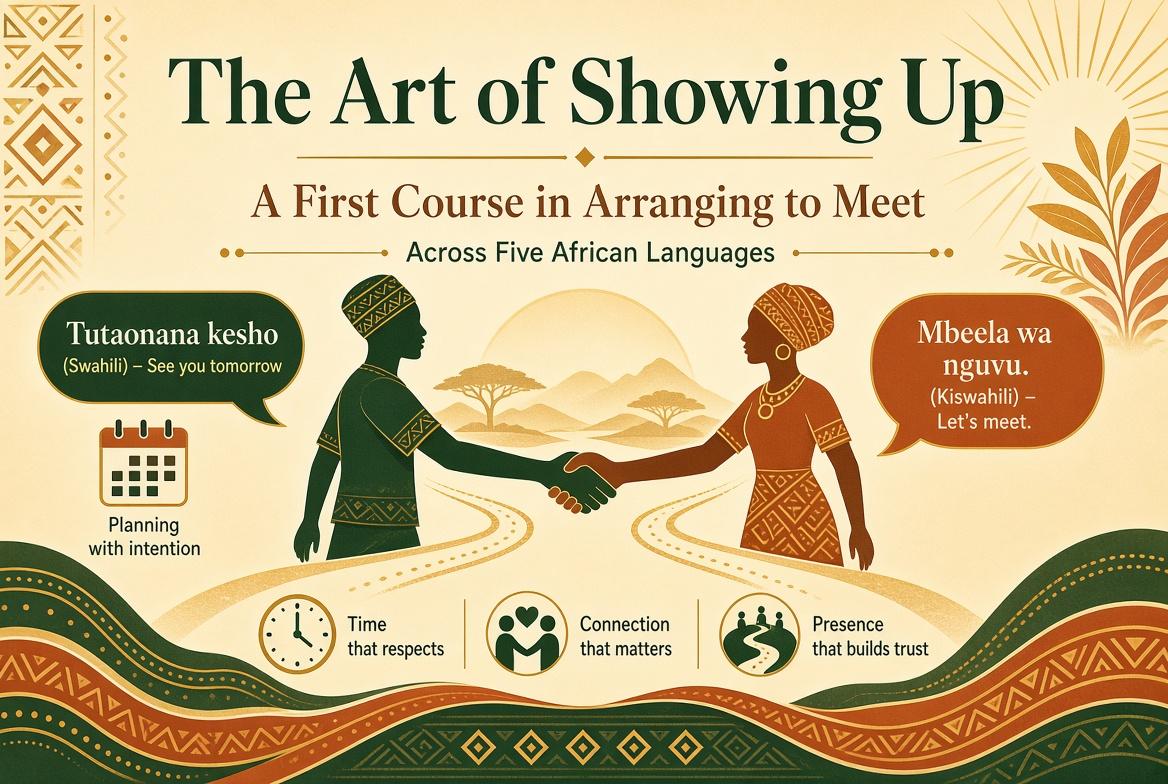
Arranging to Meet
In Nigeria, arranging to meet is rarely a simple transaction. It is a negotiation. It is a relationship. You do not just say, "Let's meet at three." You ask about the person's health. You ask about their family. You ask about the traffic. And then, eventually, you talk about the meeting.
English Hausa Yoruba Pidgin Igbo Fulfulde
Do you want to meet? Kana so mu hadu? Ṣe o fẹ́ pàdé? You wan make we see? Ị chọrọ izute? A yiɗi hawrugol?
When can we meet? Yaushe za mu hadu? Ìgbà wo ni a lè pàdé? Wen we go see? Mgbe ole ka anyị ga-ezute? Ndee tuma hawrutten?
Where should we meet? A ina za mu hadu? Níbo ni a máa pàdé? Where we go see? Ebee ka anyị ga-ezute? Toy hawrutten?
Let's meet tomorrow Mu hadu gobe Ẹ jẹ́ ká pàdé lọ́la Make we see tomorrow Ka anyị zute echi Ndeen hawru jaŋngo
I will be late Zan makara Èmi yóò pẹ́ I go late M ga-egbu oge Mi leelotoo
I am on my way Ina kan hanya Mò ń bọ̀ I dey come Anọ m n'ụzọ Mi woni e laawol
I have arrived Na isa Mo ti dé I don reach Abịala m Mi yottii
Sorry I am late Yi haƙuri na makara Ẹ má bínú, mo pẹ́ Sorry I late Ndo, m gbubiri oge Hakkilo leelotoo
---
Telling Time
Time in Nigeria is a flexible concept. The clock exists, but it is not always the master. In many communities, time is measured by the sun, by the call to prayer, by the movement of markets. But when you need to be precise, these are the words you use.
English Hausa Yoruba Pidgin Igbo Fulfulde
What time is it? Ɗaya nawa? Kí ni aago? Wetin be time? Gịnị bụ oge? Ndee waktu?
It is one o'clock Ɗaya ne Aago kan ni Na one o'clock Ọ bụ elekere otu Waktu gooto
It is morning Safiya ce Àárọ̀ ni Na morning Ọ bụ ụtụtụ Subaka
It is afternoon Rana ce Ọ̀sán ni Na afternoon Ọ bụ ehihie Caka
It is evening Maraice ne Alẹ́ ni Na evening Ọ bụ mgbede Kikiiɗe
It is night Dare ne Òru ni Na night Ọ bụ abalị Jemma
Now Yanzu Báyìí Now now Ugbu a Jooni
Later Daga baya Lẹ́yìn Later Mgbe e mesịrị Caggal
Soon Nan gaba kaɗan Láìpẹ́ Sharp sharp N'oge na-adịghị Seeɗa
One hour Awa ɗaya Wákàtí kan One hour Otu awa Waktu gooto
---
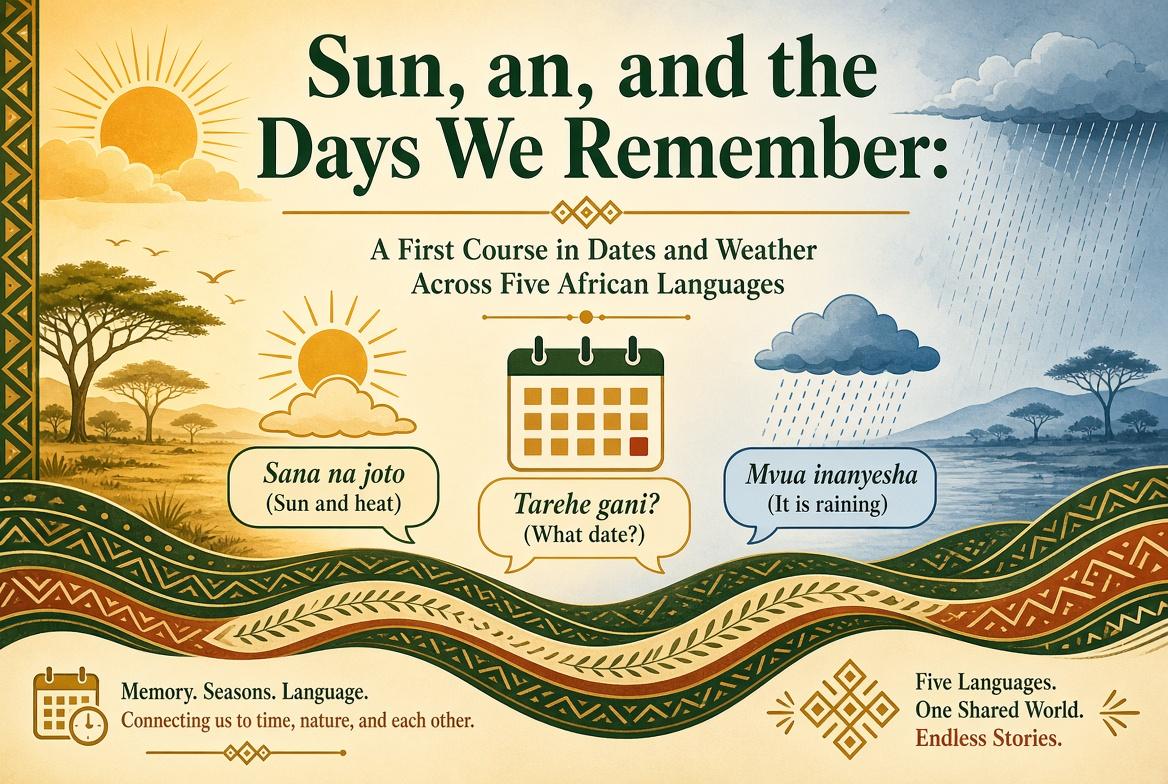
Dates
Nigeria uses the Gregorian calendar, but traditional calendars still matter. The Yoruba have a four-day week. The Igbo have a four-day week as well. The Hausa count days by the market cycle. But for modern life, these are the words you need.
English Hausa Yoruba Pidgin Igbo Fulfulde
What day is it today? Yau ranar mene? Ọjọ́ wo ni lónìí? Wetin be today? Gịnị bụ ụbọchị taa? Hannde ñalnde ndeye?
Today is Monday Yau Litinin ce Ọjọ́ Ajé ni lónìí Today na Monday Taa bụ Mọnde Hannde altine
Tomorrow Gobe Ọ̀la Tomorrow Echi Jaŋngo
Yesterday Jiya Àná Yesterday Ụnyaahụ Haŋki
This week Wannan makon Ọ̀sẹ̀ yìí This week Izu a Yontere ndee
Next week Mako mai zuwa Ọ̀sẹ̀ tó ń bọ̀ Next week Izu na-abịa Yontere aroore
This month Wannan watan Oṣù yìí This month Ọnwa a Lewru ndu
What is the date? Yau nawa ne? Ọjọ́ kí ni lónìí? Wetin be date? Gịnị bụ ụbọchị? Hannde ndeeyi?
---
The Weather
The weather in Nigeria is not small talk. It is survival. The rainy season decides when you plant. The dry season decides when you travel. The harmattan decides whether you can see across the street. These are the words that matter.
English Hausa Yoruba Pidgin Igbo Fulfulde
How is the weather? Yaya yanayin? Báwo ni ojú ọjọ́? How weather dey? Kedu ka ihu igwe dị? No weeyo?
It is hot Yana da zafi Ó gbóná E dey hot Ọ na-ekpo ọkụ No ndiyam
It is cold Yana da sanyi Ó tutù E dey cold Ọ na-ajụ oyi No ɓuuɓri
It is raining Ana ruwa Òjò ń rọ̀ Rain dey fall Mmiri na-ezo Ndiyam no aroore
It is sunny Rana na haskakawa Oòrùn ń tàn Sun dey shine Anwụ na-acha Naange no
The rain is coming Ruwa na zuwa Òjò ń bọ̀ Rain dey come Mmiri na-abịa Ndiyam aroore
The rain has stopped Ruwa ya tsaya Òjò dá Rain don stop Mmiri akwụsịla Ndiyam nani
We need rain Muna buƙatar ruwa A nílò òjò We need rain Anyị chọrọ mmiri Min nani ndiyam
---
Entertaining Guests
In Nigeria, the guest is king. When someone enters your home, you do not ask why they came. You offer them water. You offer them food. You offer them a place to sit. The greeting is long. The welcome is warm. These are the phrases that make a guest feel at home.
English Hausa Yoruba Pidgin Igbo Fulfulde
Welcome! Barka da zuwa! Ẹ káàbọ̀! Welcome! Nnọọ! Biseno!
Come in Shigo Wọlé Come inside Bata Naatu
Please sit down Don Allah zauna Ẹ jọ̀wọ́ jókòó Abeg sidon Biko nọdụ ala Achu joodo
How are you? Yaya lafiya? Báwo ni? How you dey? Kedu ka ị mere? Jam na?
I am fine Lafiya lau Mo wà dáadáa I dey fine Ọ dị mma Jam tan
Would you like water? Kana son ruwa? Ṣe o fẹ́ omi? You want water? Ị chọrọ mmiri? A yiɗi ndiyam?
Would you like food? Kana son abinci? Ṣe o fẹ́ oúnjẹ? You want chop? Ị chọrọ nri? A yiɗi nyamdu?
The food is ready Abinci ya shirya Oúnjẹ ti ṣetán Food don ready Nri dịla njikere Nyamdu heblinaama
Thank you for coming Na gode da zuwa Ẹ ṣé fún wíwá Thank you for come Daalụ maka ịbịa Jaraama warde ma
Come again Sake zuwa Ẹ tún wá Come again Bịa ọzọ Waraa kadi
---
Travel
Nigeria is a country of movement. People travel for trade, for family, for festivals, for work. The bus park is a world of its own. The train station is a place of waiting. The road is a place of stories. These are the phrases you need to move.
English Hausa Yoruba Pidgin Igbo Fulfulde
Where are you going? Ina za ka? Níbo ni o ń lọ? Where you dey go? Ebee ka ị na-aga? Toy yahataa?
I am going to... Zan je... Mo ń lọ sí... I dey go... Ana m aga... Mi yahata…
How much is the fare? Nawa ne kudin mota? Elòó ni owó ọkọ̀? How much be transport? Ego ole bụ ụgbọ? Ndee njoɓdi?
Is this the road to...? Wannan hanya ce zuwa...? Ọ̀nà yìí lọ sí...? This road go...? Ụzọ a na-aga...? Ndun laawol...?
Stop here Tsaya nan Dúró níbí Stop here Kwụsị ebe a Dartu ɗoo
I want to get off Ina so in sauka Mo fẹ́ sọ̀ kalẹ̀ I want to come down Achọrọ m ịgbada Mi yiɗi jippaade
Have a safe journey Allah ya ba ka lafiya Ẹ káàbọ̀ Safe journey Njem ọma Jahaale jam
I have arrived Na isa Mo ti dé I don reach Abịala m Mi yottii
---
Making Reservations
Reservations are not traditionally part of Nigerian hospitality. The guest simply arrives. But in modern restaurants, hotels, and transport companies, the reservation has become common. These are the phrases you need to secure your place.
English Hausa Yoruba Pidgin Igbo Fulfulde
I want to reserve a table Ina so in ajiye tebur Mo fẹ́ pa tábìlì mọ́ I want book table Achọrọ m idobe tebụl Mi yiɗi heblude teebal
A table for two Tebur na mutum biyu Tábìlì fún ènìyàn méjì Table for two Tebụl maka mmadụ abụọ Teebal yimɓe ɗiɗo
I want to reserve a room Ina so in ajiye ɗaki Mo fẹ́ pa yàrá mọ́ I want book room Achọrọ m idobe ọnụ ụlọ Mi yiɗi heblude suudu
For one night Dare ɗaya Fún òru kan For one night Maka otu abalị Jemma gooto
How much per night? Nawa ne kowane dare? Elòó ni fún òru? How much for night? Ego ole maka abalị? Ndee jemma?
Is breakfast included? An haɗa karin kumallo? Ṣé oúnjẹ àárọ̀ wà? Breakfast dey inside? Nri ụtụtụ dị? Neɗɗam subaka ina heen?
I have a reservation Ina da ajiyar wuri Mo ní ìforúkọsílẹ̀ I get reservation Enwere m ndoputa Mi naɓa heblugol
Can I cancel? Zan iya soke? Ṣé mo lè fagilé? I can cancel? Enwere m ike ịkagbu? Mi mbaawi haaytude?
---
The Grammar Beneath the Phrases
Each of these languages has its own logic, its own music.
Hausa is a Chadic language, related to Arabic and Hebrew. It uses tones, but fewer than Yoruba. Its verbs are complex, carrying information about tense, aspect, and person.
Yoruba is a Niger-Congo language, rich in tones. A single word can have three different meanings depending on whether your voice rises, falls, or stays level. This is why Yoruba sounds like music.
Nigerian Pidgin is an English-based creole. It is not "broken English." It is a full language with its own grammar, its own vocabulary, its own rules. It is the language of the street, of the market, of the people.
Igbo is a Niger-Congo language, spoken by millions in southeastern Nigeria. It is tonal, like Yoruba, and it has a rich tradition of proverbs. The Igbo say, Ọ bụ nwayọọ nwayọọ ka e ji eri ji ọkụ—it is slowly, slowly that one eats a hot yam.
Fulfulde is the language of the Fulani people, spread across West Africa. It is a Niger-Congo language, related to Wolof and Serer. It is the language of cattle herders, of travelers, of the Sahel.
---
How to Practice
You cannot learn these languages from a book alone. You must speak.
Find a Nigerian friend. Nigeria has one of the largest diasporas in the world. Find someone from Nigeria. Ask them to teach you. Practice with them.
Watch Nollywood. The Nigerian film industry is one of the largest in the world. Watch films in Yoruba, Hausa, Igbo, and Pidgin. Listen to the rhythm. Repeat the phrases.
Listen to music. Listen to Fuji, to Afrobeat, to Hausa praise songs, to Igbo highlife. The music will teach you the tones.
Be bold. Nigerians love it when foreigners try to speak their languages. They will laugh. They will correct you. They will welcome you. Do not be afraid. Speak.
---
The Fifty-First Question
There is one question that is not on the list. It is the question you ask yourself when you have learned all these phrases: Do I belong?
Belonging is not about speaking perfectly. It is about trying. It is about showing respect. It is about saying, “I see you. I hear you. I want to know you.”
In Nigeria, there is a saying: Ẹ̀gbọ́n ẹ̀gbọ́n ni ẹ̀gbọ́n. An elder is an elder. It means that respect matters. When you greet someone in their language, you are showing respect. You are saying, “You are my elder. You are my teacher. I am here to learn.”
So learn these phrases. Use them. But remember that the most important thing you can bring to any conversation is not your vocabulary. It is your humility. It is your willingness to listen.
And that humility needs no translation.
It is called respect.

Leave a comment
Your email address will not be published. Required fields are marked *